I wonder what gives us our nostalgia for the institutions that brainwash us…
A Christian missionary primary school in Amravati, where I studied till standard sixth, was my introduction to the term Alma Mater. There was a song or a prayer that we used to sing in the morning assembly which eulogized the school. ‘An Ode to Alma Mater’ or ‘Our Alma Mater’, or something similar was its name. At that age, we’re not really that reverential towards the school, of course. But I do fondly remember the school now. So, in a weird way, instead of our emotions generating our actions, somehow, those forced activities of indoctrination gave us our feelings about the school. There’s the discipline that schools imbue in us at that age. But there are also the first best friends that are often made around the same time. Our vocabularies explode, we find our favorite sports and our preferred art, and often learn concepts of mischief, groupism, favoritism, envy, pride, prize, and punishment. We can get a glimpse of how the best teachers can really change lives. It is at this time, before the age of twelve when school transitions from something to be avoided to something to look forward to. The new school year, new books, the covers, labels, shoes, socks, and uniforms, all become things that we can still smell, well, almost. For me, Amravati’s ‘D.H.S’ would always be a special place. In fact, one of the items that has been on the list for the last ten to fifteen years is visiting my favorite teacher there, Miss Mirza.
She had big scary strict eyes, but loving, warm, motherly palms. She was at once our English and History teacher but could also take over any subject and teach, say, the Science class if needed. We would love it when other teachers called in sick because that would mean Miss Mirza would fill in for them. She went behind the prayers and the songs and explained us their genesis, their intent. I remember once where she used the library session to break down every single line of the National Anthem for us, in detail. She didn’t talk about Tagore or George, the Fifth. She spoke about the country in a way that we had never heard anyone else do, despite the oodles of patriotism that was force-fed in the syllabus and the Republic and Independence Day activities. Before YouTube or any AV aids, she helped us visualize the breadth and unfathomable immensity of our country. So much so, that from the next day onwards, we didn’t need to be told to stand still during the National Anthem. Our class, IVth-A, did it with genuine pride, even as ten-year-olds.
But, apart from the lessons by teachers like Miss Mirza, I still think that primary and middle schools and the nostalgia there is driven by forced action – habits, repetition, and iteration. Action drove emotion, (sometimes) resentful then, but always fond now.
We often attribute that fondness to the people, the friends (and the memories with them), and not to any nostalgia for the brick and the stone buildings themselves. One example of that is when we moved cities due to my father’s transferring government job. At age 12, I was plucked from an all-boys, state board school in Amravati to a co-ed CBSE school in Nagpur. I had a hard time adjusting to the enormous change, so much so that I don’t have fond memories of the first two years there. Apart from the daunting jump in the syllabus and the academic levels that I was floundering to catch up to, there was some bullying, some cultural shock, and some inability on my side to make long, strong friends for those couple of years. No kid at that age would stop to pause and ensure that a new kid was okay. Thirteen-year-olds have enough to deal with already, trying to understand their own selves and their own place in the school’s social “clubs.” I can’t think of happy memories for those years. I don’t have any sweet longing to revisit those days, in thought or in conversations. This is perhaps the first and only time that I described those challenges. That book needs to stay shut.
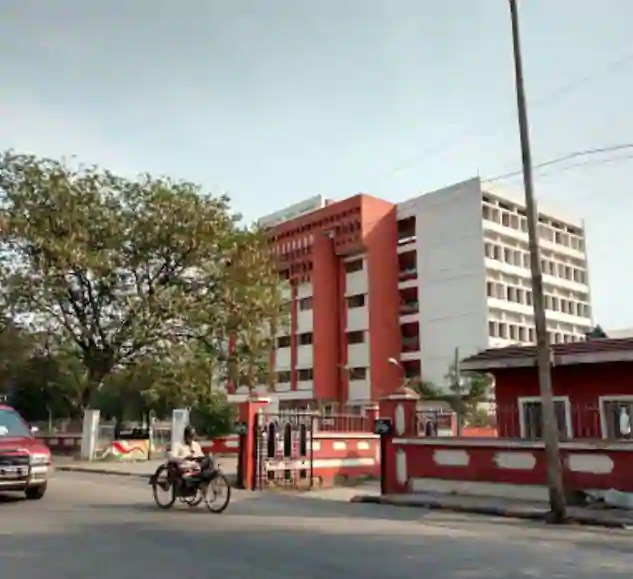
But the next four years though, standard 9th through 12th, were among my best school days, perhaps my best teenage years. The school “reshuffled” divisions, I found new classmates, made friends, found common interests, was comfortable with the studies and the culture, and so on. We were mature enough to have freedoms, whether of choosing tuitions that our friends did or skipping classes together. We also were old enough to have a handle over our inner selves, which let us utilize our natural charms as social currency to bond and mingle, instead of constantly looking over our shoulders or being self-conscious.
Revisiting ‘B.V.M’ is thus sobering in a way because it gave me my best and my worst days of school. But every time I think of that mixed bag now, I choose to pull only the happy memories out. Remembering the stairs reminds me of the hooliganism that the teachers accused us of. The staffroom reminds me of when a friend stepped on a teacher’s foot during a chase and was made to kneel outside the staff room for all teachers to see, pause, and enquire. The furniture would still probably have the engravings in them, sometimes of names of fellow students or colorful cuss words, and sometimes of teachers and the monikers that we assigned them. The tin shed would, if it still stands, remind me of the moments shared with a best friend after a tragedy at his home. I don’t talk with this friend often enough now, and yet, those moments make me think that he still is one of my best friends. Such is the power of these teenage memories.
Next was an even better institution, in terms of the memories it gave me. V.I.T, Pune, “an autonomous institute under the University of Pune”, as the brochures proudly announced. The undergrad years spent in Pune were exhilarating, as college days often are. I don’t need to elaborate on how these ages (between 18 to 21/22) give us most of our adult personalities, opinions, and habits. If high school years are for the excitement of new friendships and love, then these college ones are for the risks taken to test their boundaries. These years are when, for most of us, friends become family. Being away from home, they provide for our emotional needs without the fuss or the rigor of our homes. We think we’re adults because we legally can be called so. We develop feelings we didn’t know existed in us. In some cases, we experience the real emotions that we thought we knew from books and films, only to realize how correct and inaccurate those depictions were. We meet people from all parts of the country, from backgrounds that are opposites of ours. With and because of many of them, we question faith, we challenge norms, we make career plans – all to say that we do exactly what we’re supposed to, that we are biologically and socially programmed to do at that age. Revisiting V.I.T is like opening the Yellow Pages of nostalgia. There’s too much there. Things in it are too heavy, too important, and too indispensable. Every random page is a memory that somehow, anyhow, links to what I am today. These years are what I can revisit to pull me up when I need to, and even if I suffer memory loss in old age, I’d wish for this section to somehow be exempt from it.
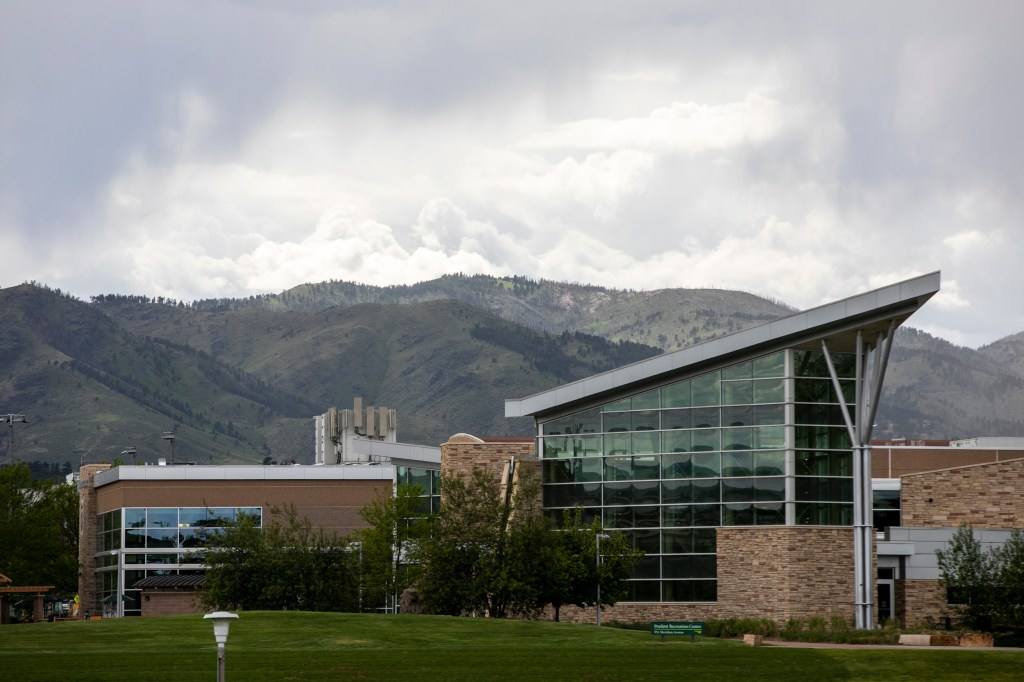
I wrote about all these today, because this morning, I took my wife and her parents to Fort Collins, to show them the ‘C.S.U’ campus, where I pursued my master’s degree. It was an hour’s drive away, and yet, I had not visited the campus in five years. As I walked with them, talking about the building and their functions, I realized that in addition to friends and memories, what lends meaning to alma maters is the location, the setting, the buildings, the landscape, and the structures, stone, brick, and wood. They’re not incidental to nostalgia. They’re crucial to it. I could not remember events very clearly for places that had been renovated. For those that weren’t, I recalled things that I thought I had forgotten. The locations serve as triggers and context, of course. But they also enhance the recollections. Good memories stay stronger as long as their settings do.
Conversely, while unpleasant memories lose their acidity with time, revisiting the actual places where they happened can help heal them completely, as you see new students, newer generations overwriting the meaning of the places, making happy memories where you made sad ones. Places can become powerful, not in a mystical or metaphysical way, but in just the weight they bear. They’re witness to lives unfolding, failing, flailing, and catching themselves, dusting themselves off, and thriving. They also hear our tears and insecurities even before we register them. The same stone steps that witnessed a heartbreak can also be the spot of a silly dance among longtime friends. These locations evoke different memories for everyone, all significant, all powerful, and none overtly dictated.
The college and school campuses are laden with meaning, overwritten by generations of students giving it their own colors. And just like holy or historic places gain meaning because of the single and singular events that happened there to shape histories, Alma Maters matter because they are filled with spots and places that were historic to our very being, and formative for the rest of our lives.
 MY AGLETS
Leave a comment